The best time to visit the Athenian Riviera, month by month
Most “best time to visit Athens” advice is written for the city. This coast keeps a different calendar: the sea runs warm later, the light turns gold sooner, and the quietest months are the best.
Last checked June 2026.
Mid-May to June, and September into October. Warm days, a swimmable sea and long evenings, without the peak-summer heat, wind and crowds.
The Saronic Gulf holds its warmth. Sea temperature lags the air by a month or so, so September often has the year’s warmest swimming — and thinning beaches.
Month by month
- January
Coolest of the year: mild, green, a season for walks and the cape
- February
The coldest sea of the year; bright, quiet, off-season
- March
Wildflowers on the headland; the sea still cold
- April
Warm days, bracing sea, spring light, almost no crowds
- May
The first proper beach weeks; sea still fresh
- June
Hot, dry, long days; the sea finally warm. A sweet spot
- July
Peak heat and the strongest meltemi; busiest
- August
Warmest sea of the year; peak season
- September
The quiet sweet spot: warm sea, thinning crowds
- October
Soft light, swimmable sea, very few visitors
- November
Mild, as the wettest stretch begins. Walks more than swims
- December
Mild and green, the wettest weeks. The cape and the tavernas
Figures are long-run Athens-area averages, the best proxy for this stretch of the Saronic Gulf; any given week varies. June, July and August are effectively rain-free. The wettest weeks come in November and December (each around 60 mm). Midwinter (December–March) is mild and green: walks, the cape and the tavernas rather than the pool.
What are you optimising for?
- Warmest sea / beach days: July, August and September. Water around 24–26°C, August the peak.
- Best for sightseeing comfort: April–May and September–October. Pleasant temperatures, far fewer people than midsummer, and the heat won’t cut your day short.
- Value and quiet, sea still warm: June and late September into October. Most of summer without the August prices, crowds or heat.
- Calmest conditions: June and September tend to be gentler than peak July–August, when the meltemi is strongest.
- If you only care about avoiding rain: June, July and August are effectively rain-free; November and December are the wettest stretch.
- Quietest of all (off-season): December–March. Mild and green, but a season for walks and the cape rather than swimming.
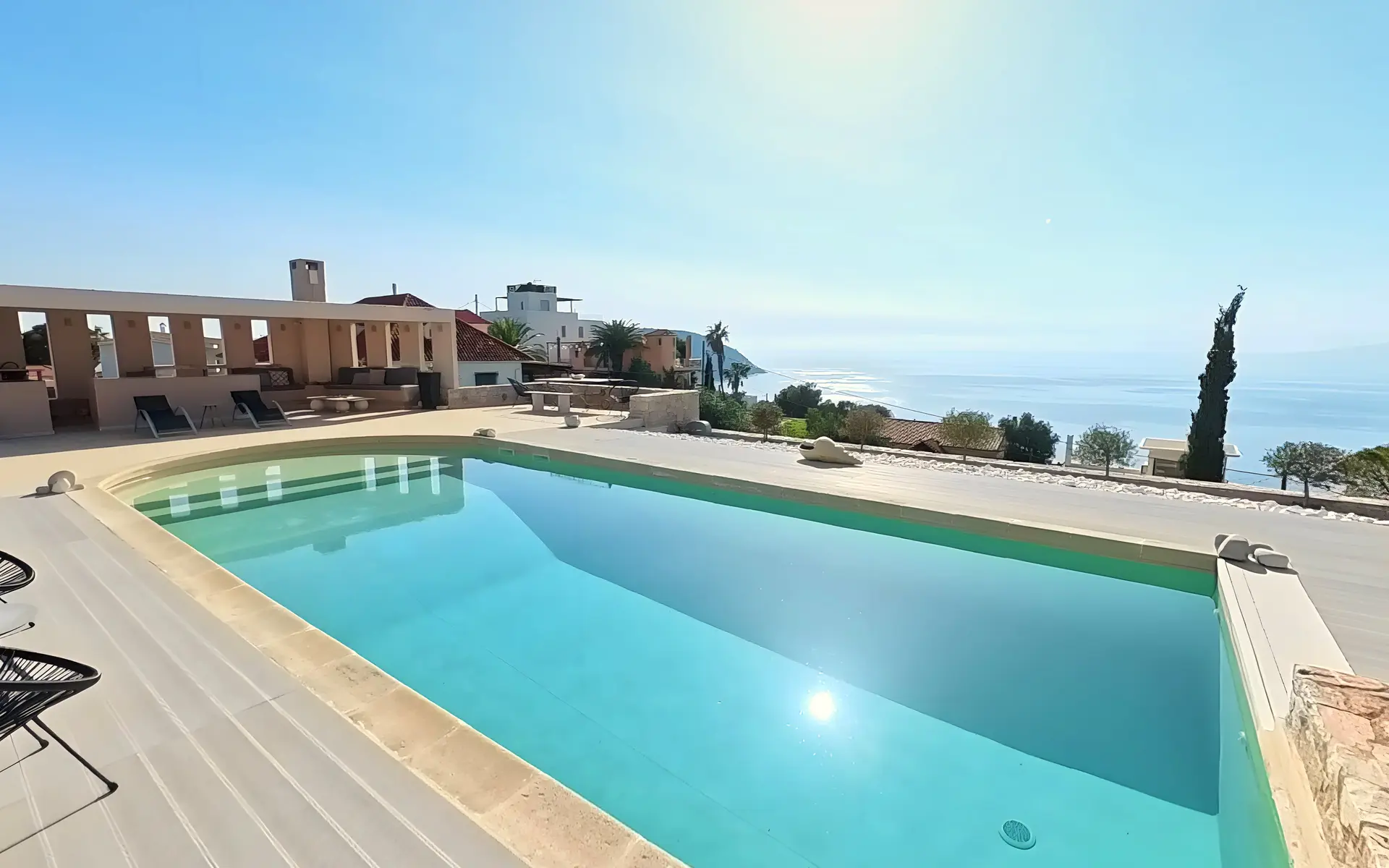
September on this coast: the warmest sea of the year, and the beaches half empty.
The swim window
The sea is comfortable from June (around 22°C), warmest from July through September (roughly 24–26°C, August the peak), still swimmable into October (around 22°C). May is fresh: about 18–19°C, wonderful after a hot afternoon, bracing first thing. The cooler shoulders are wetsuit-optional rather than a hard cutoff.
Aim for June through early October if a warm sea is the point of the trip. Which cove to choose: the wind decides as much as the water.
The meltemi, and why this coast is sheltered
A dry northerly, the meltemi, blows across the Aegean through summer, roughly May to October, strongest from mid-July to late August. It typically picks up later in the day, eases overnight, and runs at a brisk 4–5 on the Beaufort scale, occasionally 5–7 in a strong spell. Out in the Cyclades it can cancel ferries and pin you to a harbour for days.
Screened by the Peloponnese and the mainland mountains, the Saronic Gulf is more sheltered than the Cyclades: the wind arrives weaker and less often. Not wind-free. Mornings on the near coves go glassy; the afternoon breeze takes the edge off the heat and is enough for the windsurfers and paddleboarders off Anavyssos’ flat, shallow bay. The open-water gales stay out in the central Aegean. If a calm peak-summer beach stay is the goal, that sheltering is the practical case for the Riviera over the islands.
Shoulder season
May, September and October give you most of summer: warm sea, dinner outside, golden light off the gulf, without August’s heat, prices or crowds. Accommodation runs cheaper. The coast road isn’t a queue. The cape’s sunset is just as good with half the coaches.
Wild coves down the Sounio road, busy on an August weekend, go back to feeling like your own. For a stay built around a pool and a view, those weeks stay warm long after the day-trippers have gone home.
Greek Easter and the spring shoulder
Greek Orthodox Easter is the biggest holiday in the Greek year, and a moveable one. It falls in April or May, right in that warm-days, cool-sea window. Check the date for your year.
The week builds to a midnight liturgy: the village stands outside with candles, fireworks go up over the bay, and the next day every terrace turns to lamb on the spit. The country is still green, and the coast is yours before the season proper begins. Many businesses close for a few days around Easter itself. Come for the candlelit liturgy and the long lunch, not a packed itinerary.
Easter dates shift each year. Last checked June 2026.
What to pack for the coast
Anavyssos has supermarkets, a pharmacy and the everyday things. Pack for the specifics:
- Water shoes: several of the best coves are pebble or rock; a cheap pair turns a wince into a swim.
- A light layer for the evening: even in high summer the breeze comes up after sunset, on the terrace and at the cape.
- Serious sun protection: the gulf light is stronger than it feels; a hat and high-factor cream earn their place.
- A mask and snorkel: the clear water off the rocks rewards it, and you won’t want to go hunting for one.
- A Type C/F adapter for the EU two-pin sockets, and a refillable bottle for the road.
- Flat shoes with grip for the cape’s rocky headland and the steep tracks down to the wild coves.
June or September for warm sea and quiet. April–May or October for sightseeing weather without the heat. July–August only if a guaranteed beach-perfect day outweighs the crowds and the wind. The islands run a different calendar; check the ferries before you fix dates.
Good to know
When is the best time to visit the Athenian Riviera?
June and September, if the point is warm sea: long sunny days, lighter crowds, almost no rain. April–May and September–October if you want to walk without the heat. July and August are hotter, busier and windier, but the beach days are reliable.
When is the sea warm enough to swim?
June to October. Comfortable from about June (≈22°C), warmest July through September (≈24–26°C, August the peak), still swimmable in October (≈22°C). May is fresh at 18–19°C: lovely after a hot day, bracing first thing.
What is the meltemi, and does it matter here?
A dry northerly across the Aegean through summer, strongest from mid-July to late August. It typically picks up in the afternoon at 4–5 Beaufort (sometimes 5–7) and eases overnight. The Saronic Gulf is more sheltered than the Cyclades, screened by the Peloponnese and the mainland, so it arrives weaker and less often. Not wind-free: calm mornings, an afternoon breeze, and enough wind for the boards off Anavyssos’ flat, shallow bay.
Is shoulder season worth it?
May, September and October give you most of the summer (warm sea, golden light, dinner outside) without the August prices, heat or crowds. Rooms cost less, the coast road is quieter, and the cape’s sunset is the same with half the coaches. For a slow beach-and-terrace stay, those months are the best of the year.
When is Greek Easter, and is it a good time to visit?
Greek Orthodox Easter is a moveable feast. It falls in April or May and shifts each year, so check the date. Spring-green, long light, candlelit midnight liturgies and lamb on the spit. Some businesses close for a few days around the holiday itself.
What should I pack for the Athenian Riviera?
The village has the basics. Get these right: water shoes for the pebble coves, a light layer for the evening breeze, strong sun protection, a mask and snorkel, a Type C/F plug adapter, and flat shoes with grip for the cape and the steep tracks down to the wild beaches.
Get the Anavyssos & Sounion itinerary PDF
A 3-day guide to the best beaches, tavernas, and day trips from the villa — free, no spam, unsubscribe anytime.
More from the area
If a shoulder-season week on this coast is taking shape, we’re happy to talk dates and what’s open when you’d come.