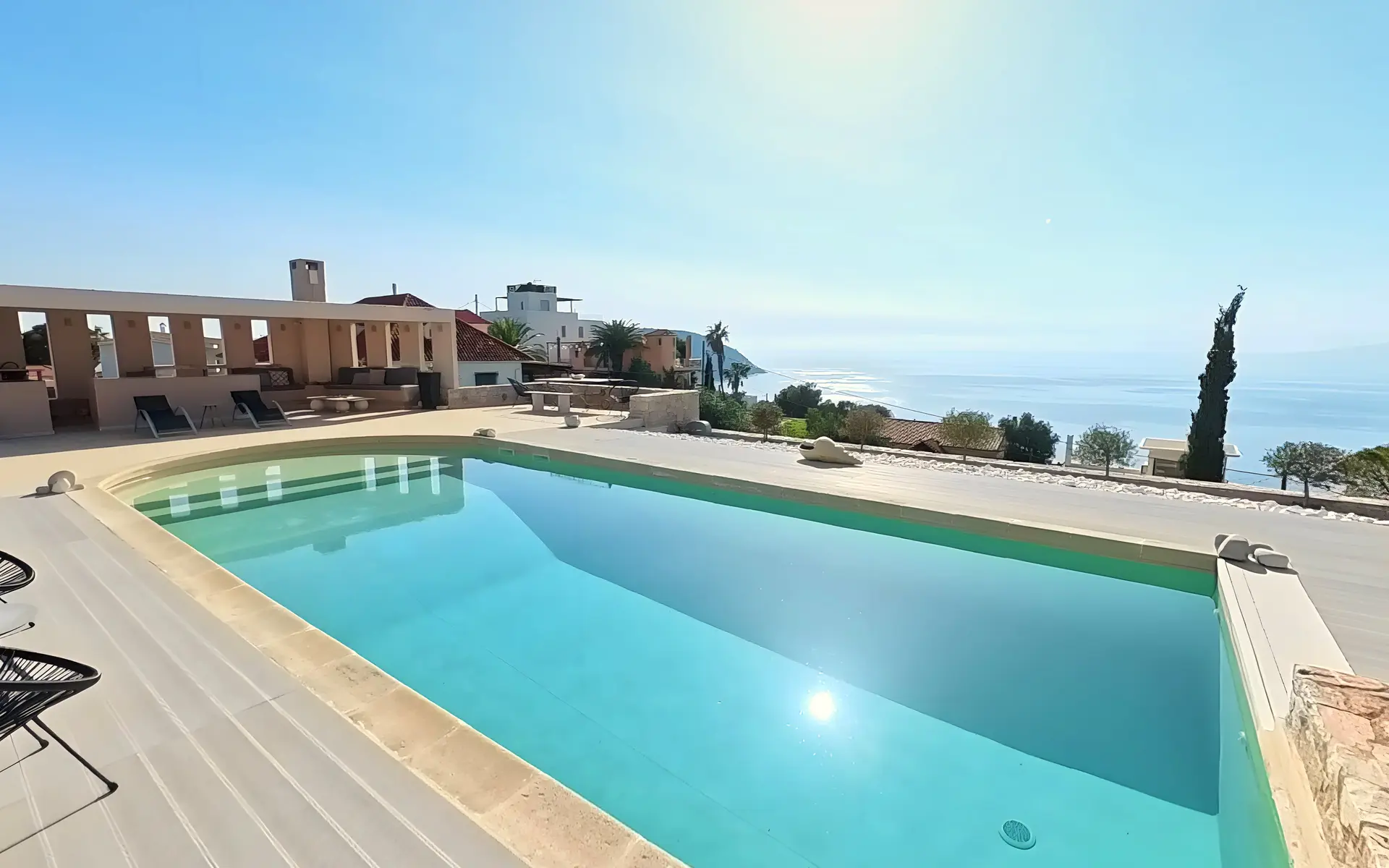
Long stays & working from the coast
Thinking about a month or a season on this coast, day job included? The listicles skip the paperwork: as of 2026 you cannot turn up as a tourist and sort the digital-nomad permit from inside Greece.
As of 2026, the Greek digital-nomad route changed. Under Law 5275/2026, in force from early 2026, you apply for the visa at a Greek consulate in your home country before you travel. Sort that first; the rest of a long stay here is the easy part.
The visa, plainly
EU and EEA citizens can stay and work as long as they like; no visa needed. Everyone else: Greece’s digital-nomad visa, for people employed or freelancing for companies outside Greece, allows a stay well beyond the usual 90 tourist days. The income test is the gate. A solo applicant must show stable net income of at least €3,500 a month (as of June 2026) from sources outside Greece; the threshold rises by about 20% for a spouse and 15% for each child. You enter on a national Type-D visa, valid for up to twelve months, then apply in Greece for a two-year residence permit, renewed in two-year steps while you meet the requirements. Long-term residence opens after five years of legal stay.
Keep this separate from the visa: Greece also offers a relocation incentive (Law 4758/2020) that exempts half of an individual’s Greek-source employment income from tax for up to seven years. It applies only to people taking up a Greek job, never to a digital-nomad earning foreign income. A Greek role in your plan? That’s for a Greek tax advisor, not us.
Guidance, not legal advice: rules change. Confirm current detail with an official source or a Greek tax advisor. Last checked June 2026.
The connection: what to expect
Attica has Greece’s most reliable broadband and mobile coverage, and the Riviera sits inside it. On mobile, COSMOTE reports 5G reaching over 99% of the population, strongest around Athens and Attica; Vodafone is at roughly 94%. Every major operator holds a strong signal here, so a phone or a 5G router is a real backup if the fixed line wavers. On the fixed line, major ISPs sell gigabit-tier fibre where FTTH has been laid, but availability runs street by street, not town by town. Greece’s national average fixed-line speed still sits below about 50 Mbps. Don’t assume any address, this one included, has fibre until the line is confirmed; for a long stay, nail that number down first.
Where to base, and the trade-off
The southern Riviera around Anavyssos is roughly thirty-five minutes from Athens airport and under an hour from central Athens, but it keeps a country pace: a working coastal town, not a resort. You are never cut off. The city for a day when you want it, the airport for a quick trip home. For a denser, more wired feel (cafés with reliable power, the nearest co-working), drift north toward Glyfada and Vouliagmeni, where the city’s remote-work scene thickens; down here you trade buzz for space. Kleos works as one natural base: four suites, so one becomes a desk with a door and the Saronic Gulf out the window. Air conditioning and a full kitchen earn their keep over a month, when you won’t want to eat out every night. Any private house here, this one included, is a home, not a serviced apartment.
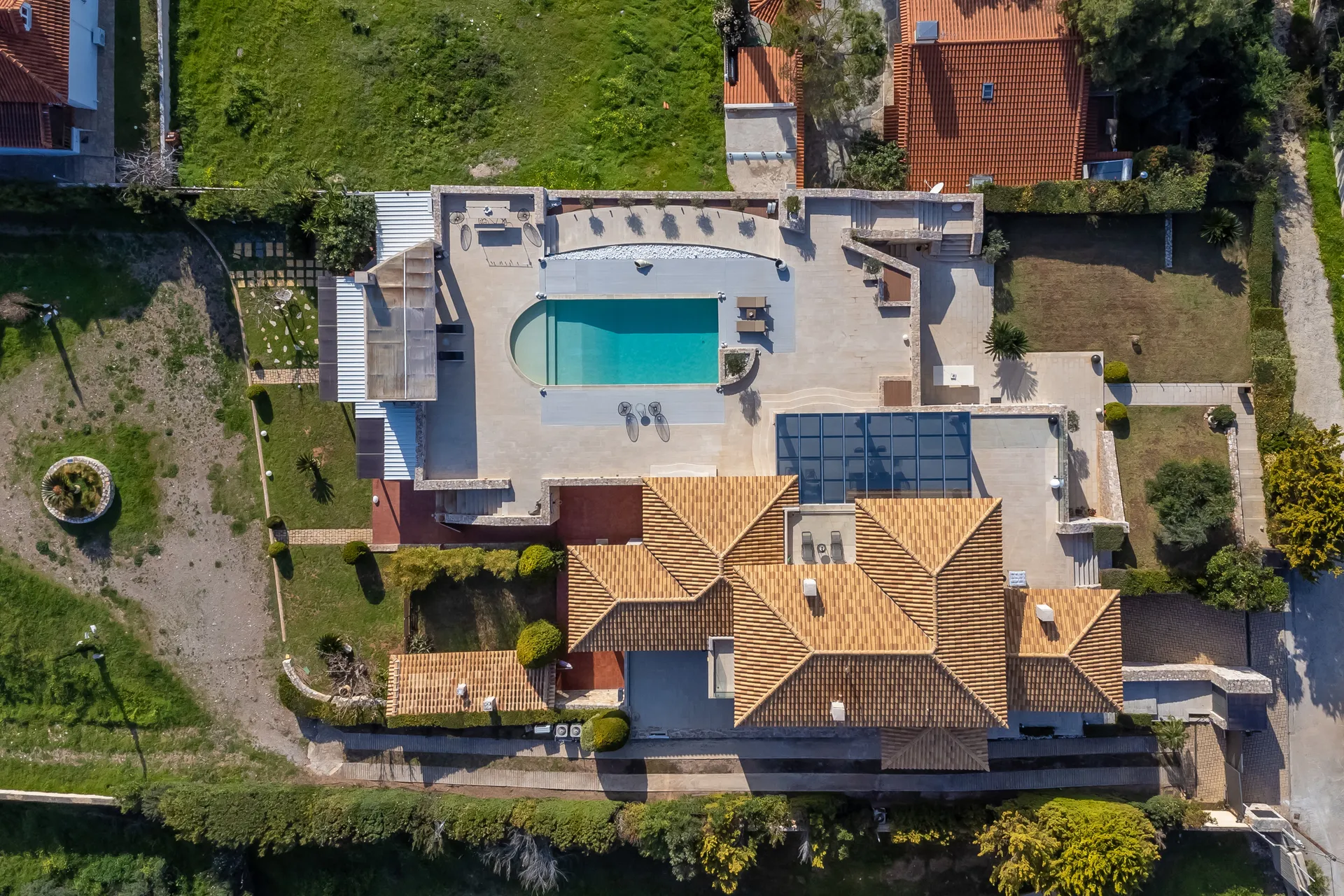
Work in the cool of the morning; the sea is there for the rest of the day.
Settling in for a month, not a holiday
A long stay is a different animal from a week away, and Anavyssos is built for the difference. There’s a supermarket and a couple of smaller groceries, a pharmacy, a bakery, tavernas that come to know their regulars. Within a week you have a routine: where you buy fish, the beach you default to, the café that does your morning coffee. A month finds its own shape: work early, swim or walk the coast in the afternoon, long unhurried evenings. It is living by the sea rather than visiting it.
For weeks or months, plan on a car. It covers groceries, pharmacy runs, beaches and day trips, and makes the quieter end of the coast workable rather than isolating. A car-free month is possible (airport transfers, the coastal KTEL buses for Athens and along the shore), but slower, and the bus thins out off-season. The drive and whether you need a car from day one are in the getting-here guide.
On timing, the kindest stretch is shoulder season: warm, swimmable, quieter and better value than peak summer. Winter is genuinely peaceful but sleepy; some seaside tavernas shut and the beach is for walking, not swimming. The month-by-month guide has the air and sea temperatures if you’re choosing your window. Weighing the coast against island-hopping? The coast-vs-islands guide is the honest comparison.
Good to know
Do I need a digital-nomad visa to stay and work from Greece?
EU/EEA citizens don’t; they can live and work freely. Non-EU remote workers can use Greece’s digital-nomad visa to stay beyond the 90-day tourist limit. A solo applicant must show stable net income of at least €3,500 a month (as of June 2026) from sources outside Greece; the threshold rises by about 20% for a spouse and 15% per child. The key 2026 change: under Law 5275/2026 you can no longer apply from inside Greece as a tourist. Obtain the Type-D visa from a Greek consulate in your home country before you travel, then convert it to a residence permit. Verify the current rules with the consulate or a Greek immigration adviser. Last checked June 2026.
What is the internet like on the Athenian Riviera for remote work?
Good. Attica has Greece’s most reliable broadband and mobile coverage, and the Riviera sits inside it. On mobile, COSMOTE reports 5G reaching over 99% of the population, strongest around Athens and Attica, with Vodafone at roughly 94%. All the major operators hold a strong signal along this coast; a phone or 5G router is a dependable backup for calls. On the fixed line, the major ISPs sell gigabit-tier fibre where FTTH is live, but availability runs street by street. Greece’s national average fixed-line speed still sits below about 50 Mbps, so don’t assume any one address has fibre until you’ve checked it.
Is the 50% Greek tax break the same as the digital-nomad visa?
No, and it’s a common mix-up. Greece offers a separate relocation incentive (Law 4758/2020) that exempts half of an individual’s Greek-source employment income from tax for up to seven years, but only for people taking up a Greek job. A digital-nomad earning foreign income does not get the break. If a Greek role is part of your plan, that’s a question for a Greek tax advisor.
Do I need a car for a longer stay?
For weeks or months, yes: a car makes groceries, beaches and day trips easy, and Anavyssos has the everyday shops, a pharmacy and tavernas. For a short stay you can manage with airport transfers and the coastal bus; a longer stay is much easier on four wheels.
More from the area
If Kleos is on your shortlist for a longer stay, we’ll confirm the real internet line for your dates and talk through how a month here works. No obligation.