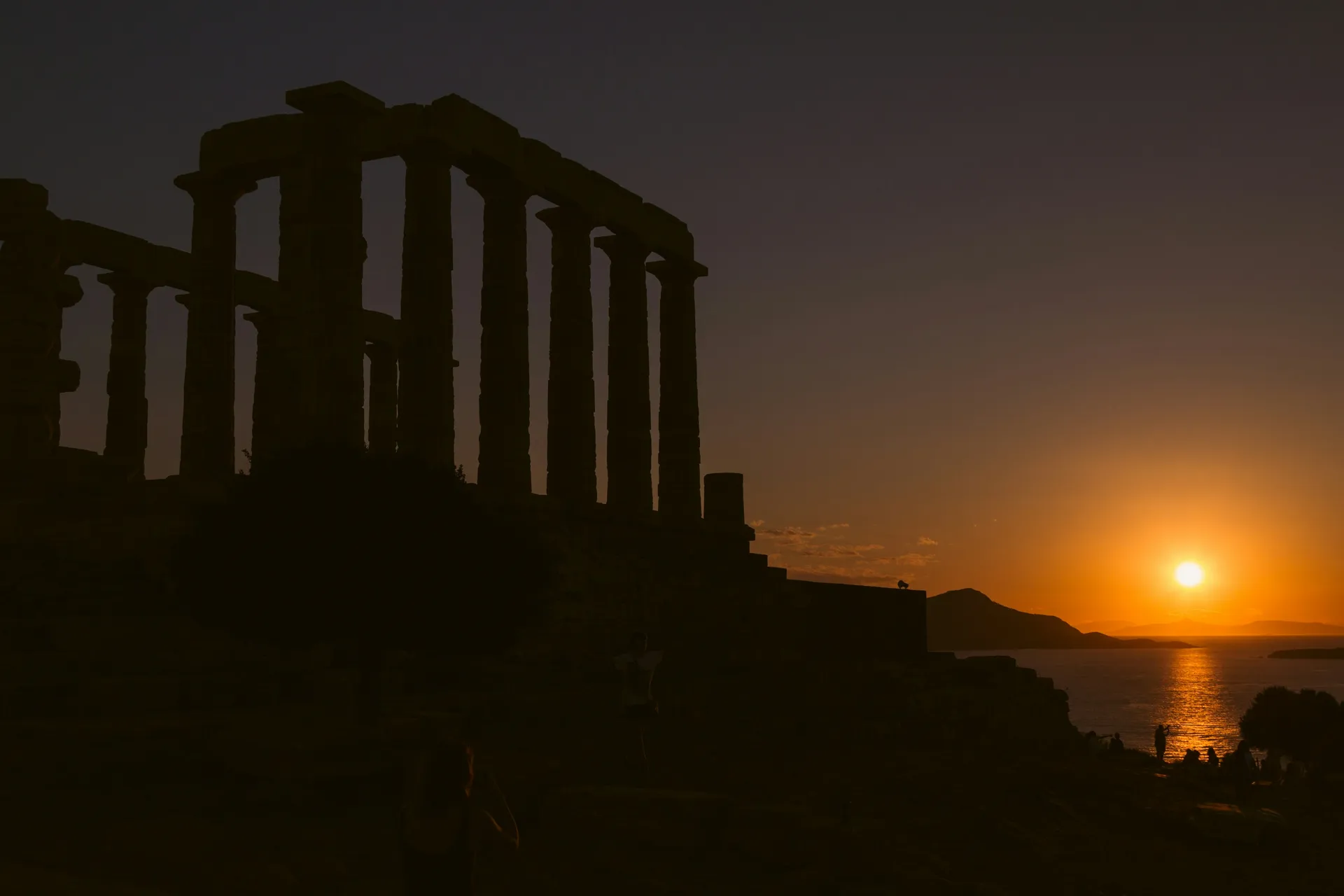
Cape Sounion sunset: when to go, and the moment most people miss
Every evening, coaches climb the headland from Athens and phones fill the railing. Be in place before they do, and stay the quarter-hour after the gate shuts.
The sunset at Cape Sounion is the one the guidebooks set beside Santorini’s Oia. Fifth-century marble on a sixty-metre headland, gold as the sun drops past the islands into open sea.
Most people do it the hard way: a coach from the city into the late-afternoon crush, a scramble for the cliff edge, then gone the moment the sun touches the water.
Sunset times at Cape Sounion by month
Sunset on the 15th of each month at the cape, local Greek time. Be on site30–45 minutes before the listed time, and stay for the afterglow.
| Month | Sunset (approx.) | Arrive by |
|---|---|---|
| January | 17:27 | 16:45 |
| February | 18:02 | 17:20 |
| March | 18:30 | 17:45 |
| April | 19:58 | 19:15 |
| May | 20:25 | 19:40 |
| June | 20:46 | 20:00 |
| July | 20:46 | 20:00 |
| August | 20:19 | 19:35 |
| September | 19:34 | 18:50 |
| October | 18:48 | 18:05 |
| November | 17:14 | 16:30 |
| December | 17:07 | 16:25 |
- Gate hours: about 09:30 to near sunset (closes around 18:30, later on the longest summer days). Last entry roughly 30 minutes before.
- Entry fee: modest; a handful of free-admission days fall through the year, and 1 November–31 March the first and third Sunday of the month are free.
- Busiest: the Athens coach crush lands roughly 16:00–18:00 in summer, several coaches deep. A weekday evening is calmer.
- Free alternative: the coves below (Legrena, KAPE, Sounion beach) share the same horizon with no gate and no ticket.
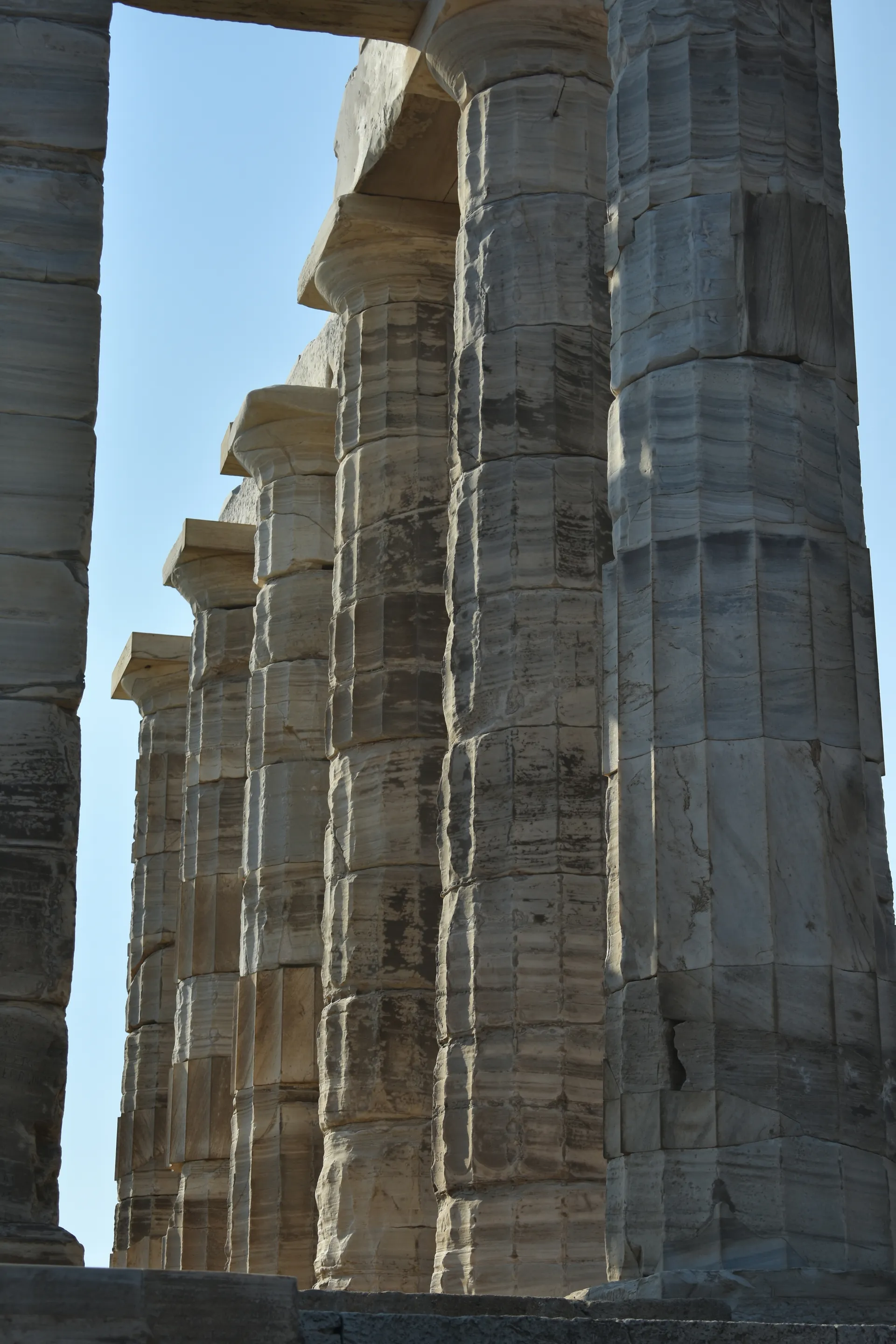
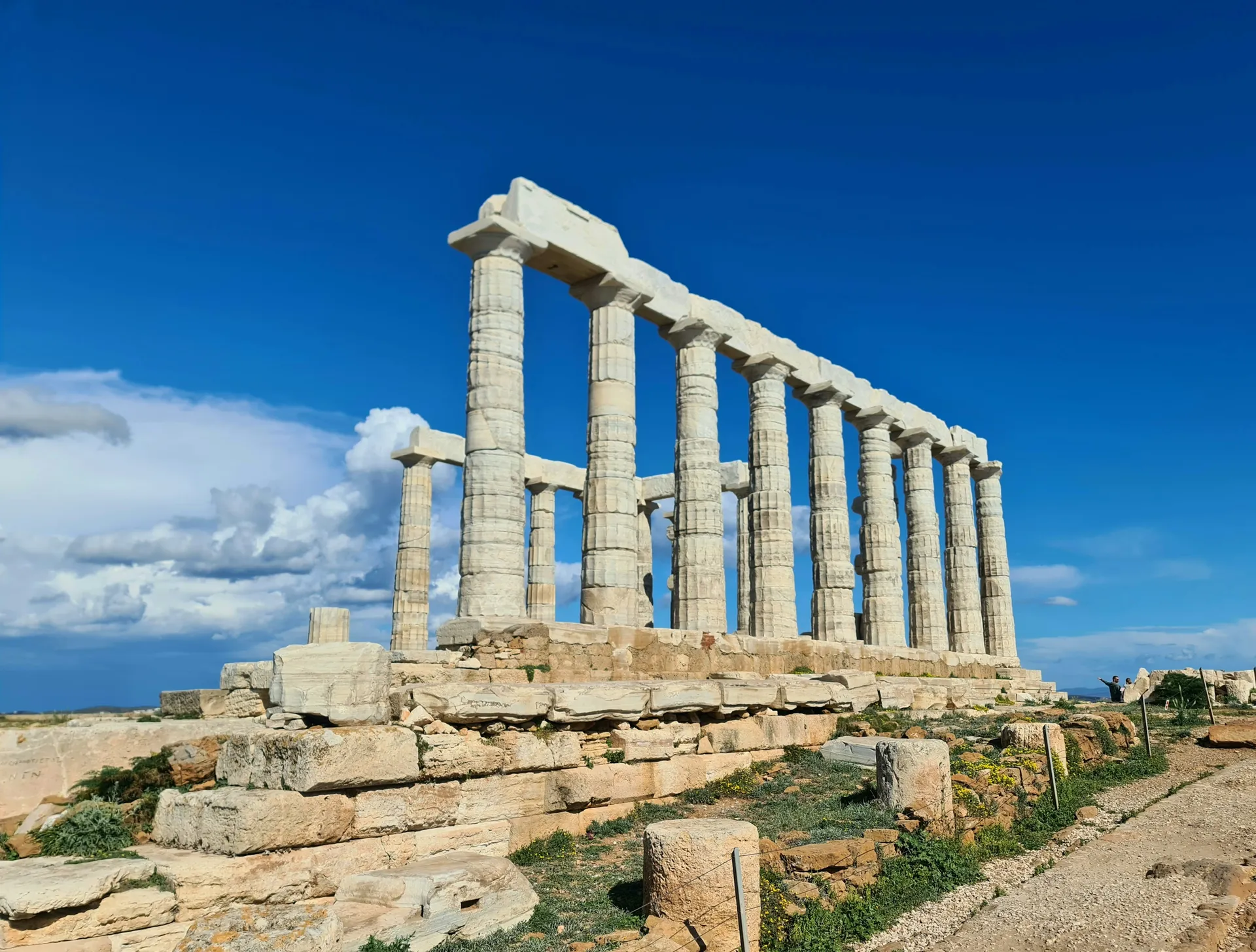
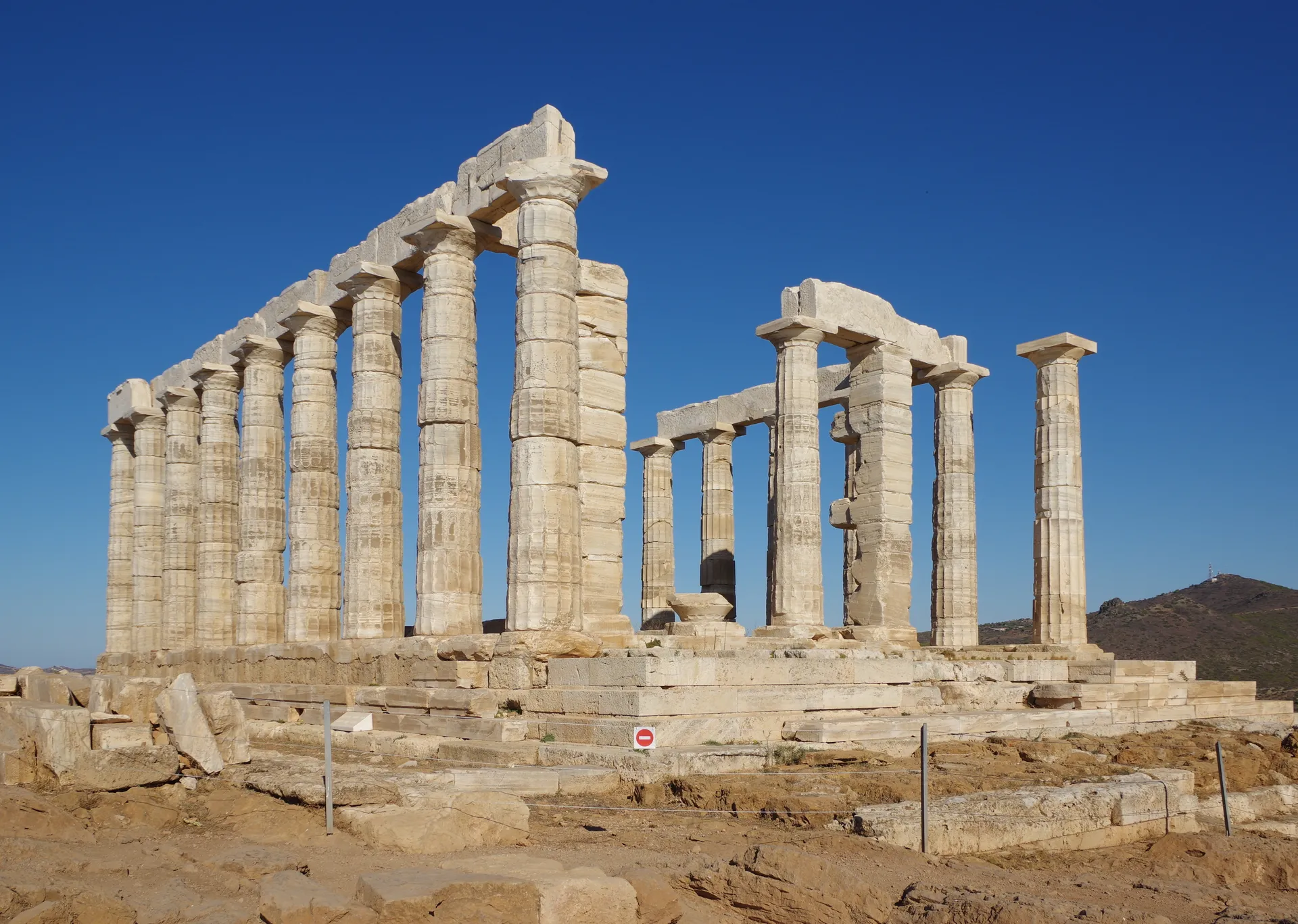
The Temple of Poseidon at Cape Sounion. Fifteen of the original thirty-four Doric columns still stand on the headland.
Getting the timing right
Walk the site and claim the western edge before it fills. A weekday evening is calmer than the 16:00–18:00 coach crush.
Don’t leave when the sun does. Floodlights come up in the quarter-hour after it drops, the coaches empty, and the headland goes quiet. That deep-blue afterglow is the part almost everyone misses.
What you’re looking at
Islands fade into the Aegean on a clear evening from this headland. The temple went up around444–440 BC, in the age of Pericles, the same building programme that raised the Parthenon. An earlier Archaic temple on the same site was razed by the Persians about 480 BC. It crowns the headland some sixty metres above the water and once guided Athenian ships home.
The colonnade is Doric: originally thirty-four slender columns of white marble, quarried just inland at Agrileza. Fifteen of them still stand against the sky. By tradition one column bears Byron’s name; he came here around 1810. Centuries of other graffiti make it hard to find without a zoom lens. He immortalised the cape in “The Isles of Greece”: “Place me on Sunium’s marbled steep…”The theatre and silver mines at Thorikos sit just up the coast toward Lavrio.
Where to watch beyond the railing
On a busy evening the railing is the noisiest seat on the cape.
- Inside the columns: the postcard, with the marble lit around you. Pay in, arrive early, expect company.
- The headland just outside the gate: free, open after the site closes, and where the deep-blue afterglow is best once the crowd files out.
- The coves below (Legrena, KAPE, Sounion beach): the same open-Aegean horizon, the temple a silhouette on the cliff above, and no ticket.
- From the water: a sunset cruise passes below the headland and gives you the temple lit gold from the sea, with space and a breeze.
- A west-facing terrace on the coast: the towns between Anavyssos and the cape share the same gulf, ticket-free, on a night you’d rather not drive.
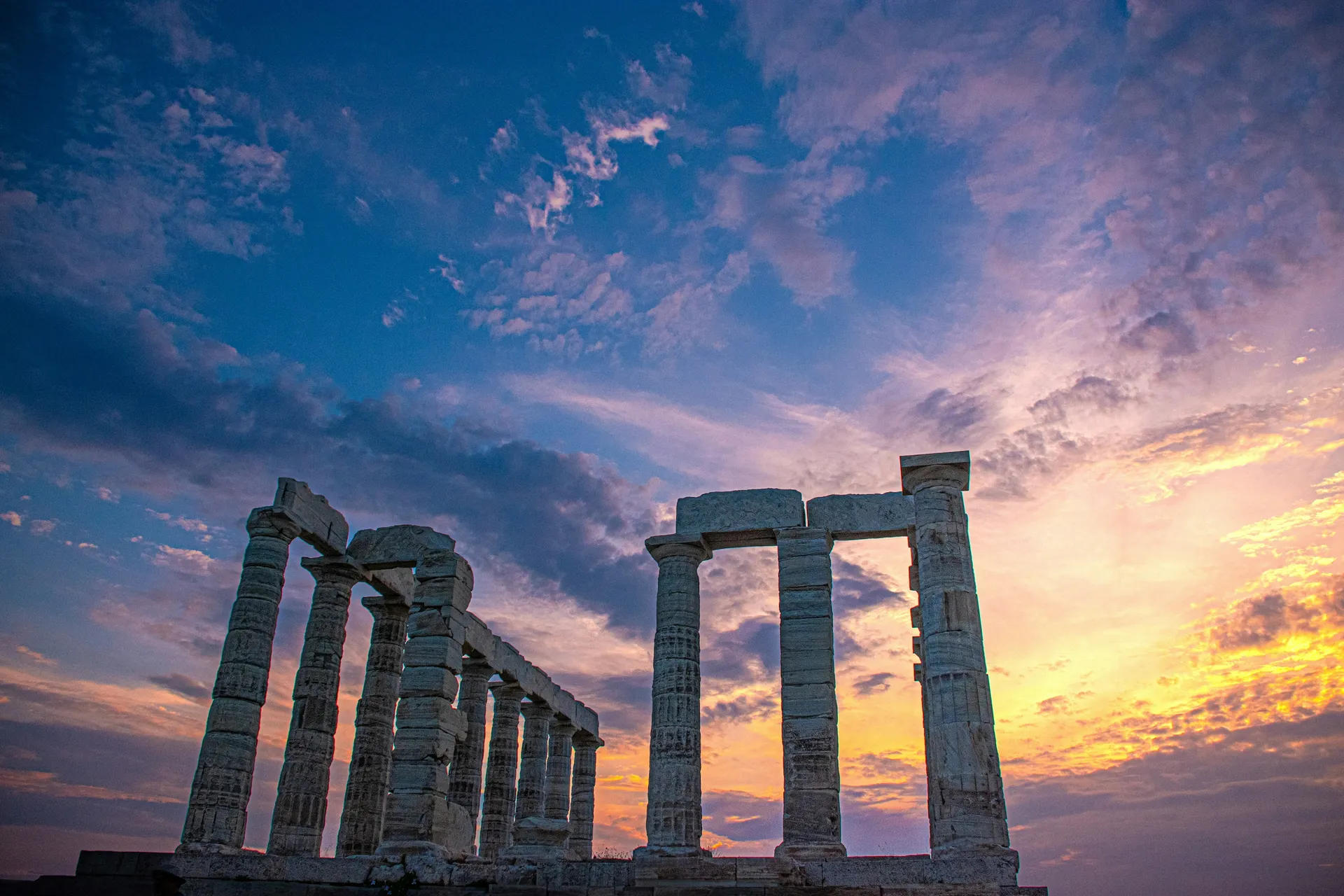
The columns against the evening sky. The cape is about half an hour down the coast from the house.
Getting there
Cape Sounion is at the southern tip of Attica. From central Athens it’s an hour-plus down the coast road, which is why the day-trip coaches leave mid-afternoon and arrive into the crush. FromAnavyssos it’s about half an hour, close enough to leave after the afternoon and still be early.
Without a car, an inexpensive KTEL coastal bus runs from central Athens to Sounio along the shoreline. Scenic but slow, so check the current timetable and the time of the last bus back before you rely on it. The getting-here guide has drive times and transfer options for this end of the coast.
Before you go
- Hours and entry. About 09:30 to near sunset. Gate around 18:30, later on the longest summer days. Last entry roughly 30 minutes before. Modest fee.
- Free days. A handful of free-admission days fall through the year, and from 1 November to 31 March the first and third Sunday of the month are free.
- The ticket-free option. The coves just below (Legrena, KAPE, Sounion beach) have no gate at all and share the same open-Aegean horizon.
- What to bring. The headland is exposed, with little shade and a wind that gets up at sunset. Bring a light layer, water, and closed shoes for the uneven paths. There’s a café and restrooms at the entrance.
The entry fee, gate hours and free days shift season to season. Confirm at the official site before you go. Last checked June 2026.
Photographing the temple
Marble glows warmest in the last half-hour of light. Side-light the columns before the sun touches the horizon; after it drops, the temple goes to silhouette.
From the headland, work the columns against the western sky. Blue hour brings floodlights and an indigo sky behind the stone. A longer lens and a low angle from the outer path keep other visitors out. Fifteen minutes after the gate closes, the headland thins. Bring more card and battery than you think. The light changes fast.
Good to know
When is the best time to see the Cape Sounion sunset?
Arrive 30–45 minutes before sunset: late on long summer evenings, by early evening in autumn, earlier after the clocks go back at the end of October. Stay for the afterglow, when most of the crowd leaves. Weekdays are calmer. The Athens coach crush is heaviest around 16:00–18:00 in summer.
Do you need a ticket for the Temple of Poseidon, and what are the hours?
Yes. Modest entry fee; confirm the current price at the official site. Open about 09:30 to near sunset (closes around 18:30, later on the longest summer days), last entry roughly 30 minutes before. Free-admission days fall through the year; from 1 November to 31 March the first and third Sunday of the month are free. The coves below (Legrena, KAPE, Sounion beach) have no gate.
Is Cape Sounion crowded at sunset?
Coaches from Athens fill it in summer, heaviest around 16:00–18:00. A weekday evening, the last hour before the gate closes, or a cove below the temple all sidestep it.
How do you get to Cape Sounion?
It sits at the southern tip of Attica. From central Athens, an hour-plus down the coast road; from the Anavyssos stretch just north, where Kleos sits, about half an hour. An inexpensive KTEL coastal bus runs from central Athens to Sounio; scenic but slow, so check the timetable and the last return before you rely on it.
Where is the best place to photograph the Temple of Poseidon?
Side-light the columns in the last half-hour before sunset. After the sun drops, the temple goes to silhouette. Shoot against the western sky from the headland, or wait for blue hour after the gate closes, when the floodlights come up. A longer lens and a low angle from the outer path keep other visitors out of the frame.
More from the area
Go on a weekday, be in place forty minutes before the sun, and stay for the blue quarter-hour after the gate shuts — that’s the Sounion most people drive home too early to see.