Weddings & celebrations · Athenian Riviera
Getting married on the Athenian Riviera
The civil-marriage paperwork, the venues along the Cape Sounion–Anavyssos coast, and the bit no checklist mentions — from someone who lives where the weddings happen.
The thing the wedding blogs skip: in Greece the legal marriage and the celebration are two separate problems. The paperwork is fast and bureaucratic — a civil licence is issued by the local municipality (the dimos) around a week after you apply, with no residency requirement for foreigners. Where you can actually stand and say the vows is the part that trips people up, and it’s worth settling before you fall for a venue.
This is one of mainland Greece’s real destination-wedding corridors — the coast running south from Lagonissi past Anavyssos to Cape Sounion, about an hour’s drive from Athens and roughly forty minutes from the airport. Couples come for the obvious reason: a Temple-of-Poseidon sunset and a warm sea without a ferry to reach it. Below is what a resident would tell you about the venues, the documents and the quiet-hours rules before you book anything.
Marrying in Greece — the paperwork, plainly
For most foreign couples the civil route is the simplest. The local municipality issues the marriage licence around a week — roughly eight days — after you apply (the dimos waits one week for any third-party objection), with no residency requirement. Your foreign documents — typically a long-form birth certificate and a certificate of no impediment, plus a divorce decree if relevant — need a Hague-Convention apostille and a certified translation into Greek before the municipality will accept them. Both civil and Greek Orthodox ceremonies are legally valid; an Orthodox church wedding additionally needs an ecclesiastical licence and baptismal certificates. Whichever you choose, the marriage must be registered within forty days of the ceremony, or it has no legal effect.
The honest catch: whether a registrar will officiate at a private property — a garden, a terrace — rather than at the town hall or an approved venue is municipality-dependent and not a given. Plenty of couples do the legal signing at the dimos and hold the party wherever they please. Confirm the document list and where the ceremony can legally happen with your chosen municipality and a local planner; details vary by nationality and these are around-figures, so verify before you commit.
The Anavyssos–Sounion coast at dusk — established wedding country, an hour south of Athens.
The venues, honestly — what each one is
These are independent venues, not partners or anything I have a stake in — treat the list as a map of the coast, not a recommendation engine. From south to north:
- Cape Sounio Grecotel — a beachfront resort directly beneath the Temple of Poseidon. This is the postcard backdrop, and it scales to large receptions; expect resort pricing and resort formality to match.
- Ktima 48 (Anavyssos) — a private seafront estate that hosts large al-fresco receptions. Garden-and-sea rather than monument backdrop; good if you want space and a beach setting without the resort wrapper.
- Pyrgos Melissourgou (near Lagonissi) — a 17th-century stone tower estate. The most characterful of the group if you want history and walls rather than open sea, and it leans toward the smaller, more intimate end.
- Grand Resort Lagonissi — a full peninsula resort further up the coast, for couples who want everything (rooms, spa, multiple ceremony spots) on one site.
Rough rule of thumb: the resorts (Cape Sounio, Lagonissi) suit larger guest lists and one-stop logistics; the estates (Ktima 48, Pyrgos Melissourgou) suit smaller, more personal weddings. None of these are walkable from one another — reckon on a car or shuttle between where guests sleep and where you celebrate. Confirm capacities and current packages with each venue directly; the details above are orientation, not quotes.
What no checklist tells you: quiet hours
If your celebration runs outdoors, Greece’s statutory quiet hours (koini isychia) set the real end-time. In summer — roughly 1 April to 30 September — the protected night period begins at 23:00, so amplified music is expected to wind down around then (there’s also a quieter mid-afternoon stretch). It’s easily planned around: the long, golden part of a Riviera evening happens well before eleven. Tell a band or DJ up front and it’s a non-issue. Choosing dates is its own decision — the month-by-month guide covers heat, sea-warmth and crowds, and the wider area guide maps the coast the celebration sits on.
For the occasion worth marking
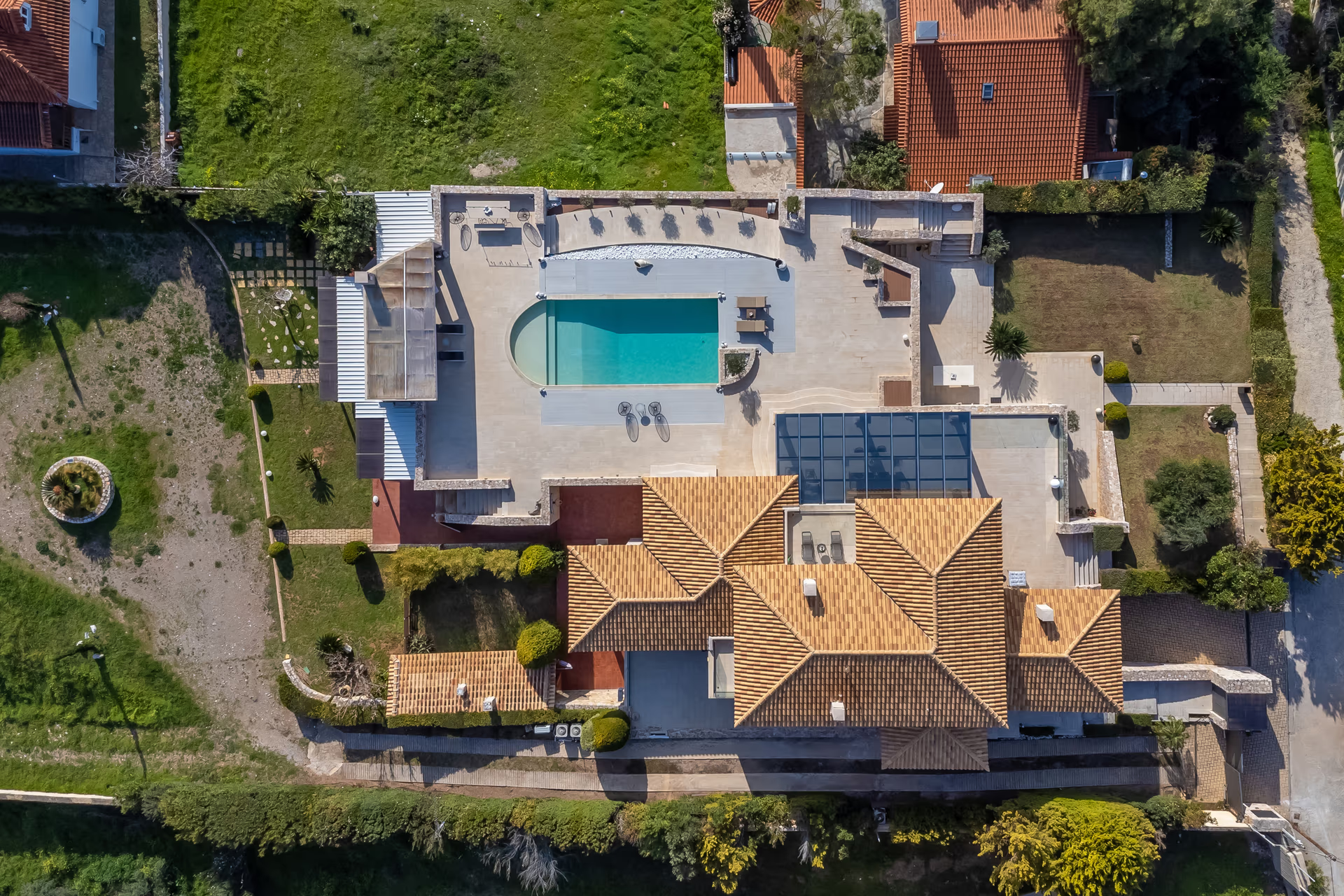
Not every gathering is a wedding. A landmark birthday, an anniversary, a reunion long overdue — the same coast carries those just as well, often with far less paperwork. A private chef or in-villa dining is a standard, easily-arranged service across this part of the Riviera if you’d rather a long dinner came to you than book a restaurant. Where we’d base a group for any of this is the house itself — quietly, as the place everyone sleeps and wakes to the same view, not the banquet hall.
For a multi-generational family
The Riviera-over-islands case is strongest for the trips with the widest age range. One roof keeps grandparents, parents and small children in the same place without anyone drawing the short room — here it’s up to ten guests across sea-view rooms, with a pool the whole group naturally gathers around. The nearest swim is about two minutes downhill, and Athens is close enough for the active ones to spend a day at the Acropolis while the rest stay by the water.
The real win is what you don’t have to do: no ferries to time, no repeated check-ins, no splitting the party across rooms in different buildings. That’s the logistics that make big family trips hard work, and basing on the coast removes most of them. If you’re weighing it against island-hopping, the riviera-vs-islands guide lays out the trade-off, and the itinerary guide shows how the days actually fill.
The short version: settle where you can legally marry before you fall for a venue, start the apostille-and-translation paperwork early, plan around the 23:00 summer quiet-hours, and book a peak-season date a year out. If you only want the celebration and not the legal headache, do the signing at the municipality and hold the party wherever you like.
Good to know
How far ahead should you plan a Greek wedding?
Give yourself plenty of runway. The legal paperwork moves quickly once you apply — a civil marriage licence is issued by the local municipality around a week (roughly eight days) after submission — but the popular Riviera venues book up months in advance for the peak May-to-September season, and gathering apostilled, translated documents takes time on your end. A planner working a year out is comfortable; six months is tight but workable for a small ceremony. Confirm the timeline with your chosen municipality, as document lists vary by nationality.
Can you legally marry at a private villa in Greece?
Not always, and it’s the question to settle first. Civil ceremonies are performed by a registrar, and whether one will officiate at a private property — rather than at the town hall or an approved venue — is municipality-dependent and not guaranteed. Many couples handle the legal signing at the municipality and hold the celebration wherever they like. Ask your chosen dimos and your planner before you assume a garden ceremony is on; the answer shapes the whole plan.
What paperwork do foreign couples need to marry in Greece?
For a civil wedding: foreign public documents — typically a long-form birth certificate and a certificate of no impediment (single-status affidavit), plus a divorce decree if relevant — must carry a Hague-Convention apostille and be officially translated into Greek before the municipality will accept them. Both civil and Greek Orthodox ceremonies are legally valid; civil is the usual route for visitors, and a religious wedding additionally needs an ecclesiastical licence and baptismal certificates. Whichever you choose, the marriage must be registered within forty days of the ceremony.
What about quiet hours and amplified music for an outdoor party?
Greece keeps statutory quiet hours. In summer (roughly April to September) the protected night period starts at 23:00, so plan amplified music to wind down around then; there’s also a quieter afternoon stretch in the mid-afternoon. It’s easily planned around — the long, golden part of a Riviera evening happens well before eleven — but it’s worth telling a band or DJ up front so nobody’s surprised.
Marriage-licence timing, registration deadlines and quiet-hours periods are statutory but can change, and venue capacities and packages shift season to season — confirm the current rules with your chosen municipality, a local planner and each venue before you commit. Last checked June 2026.
More from the area
Need a private base on this coast for the wedding party or the gathering itself? Tell us your dates and we’ll see whether the house is free.